The Elizabeth
Project Overview
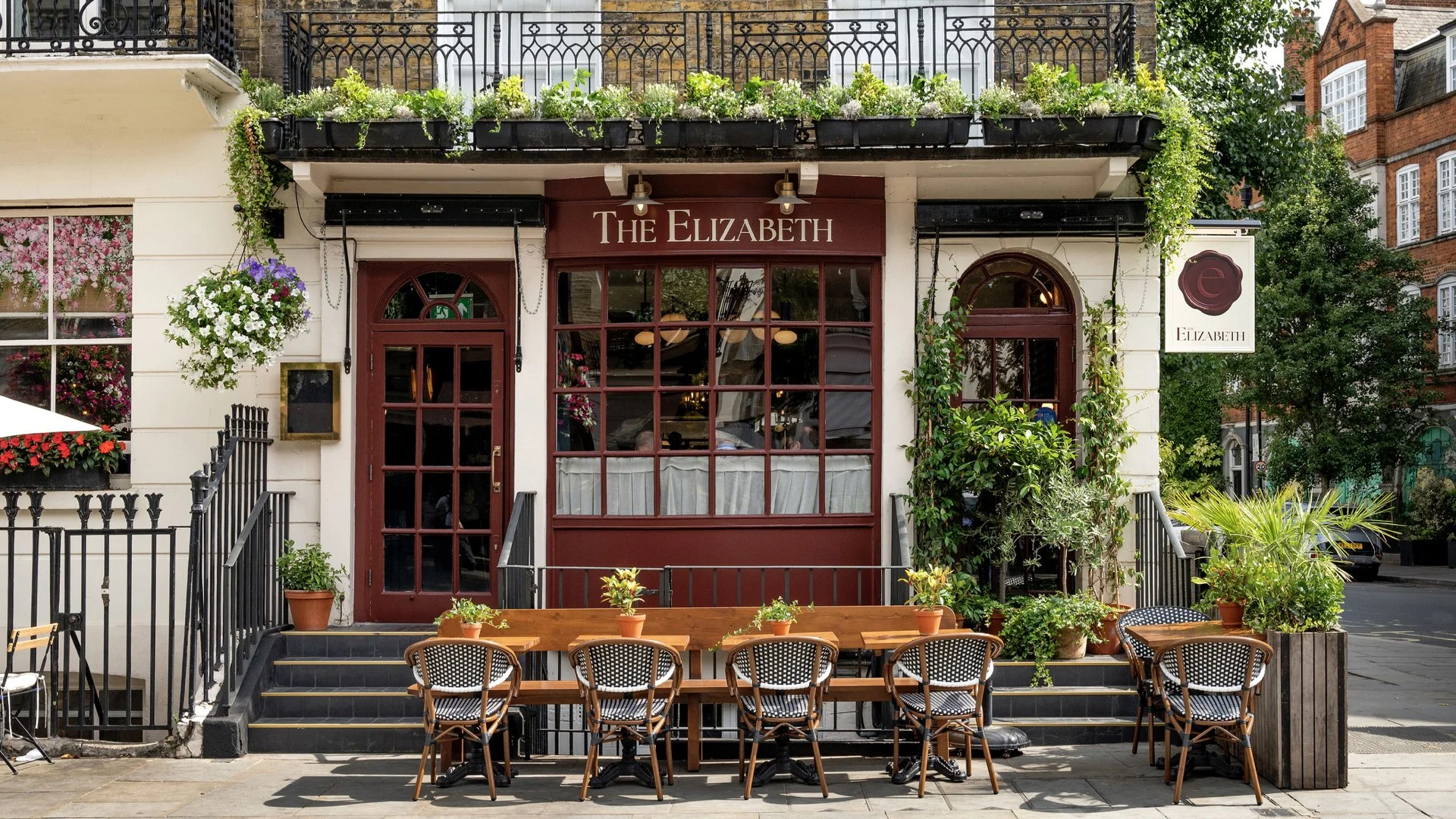
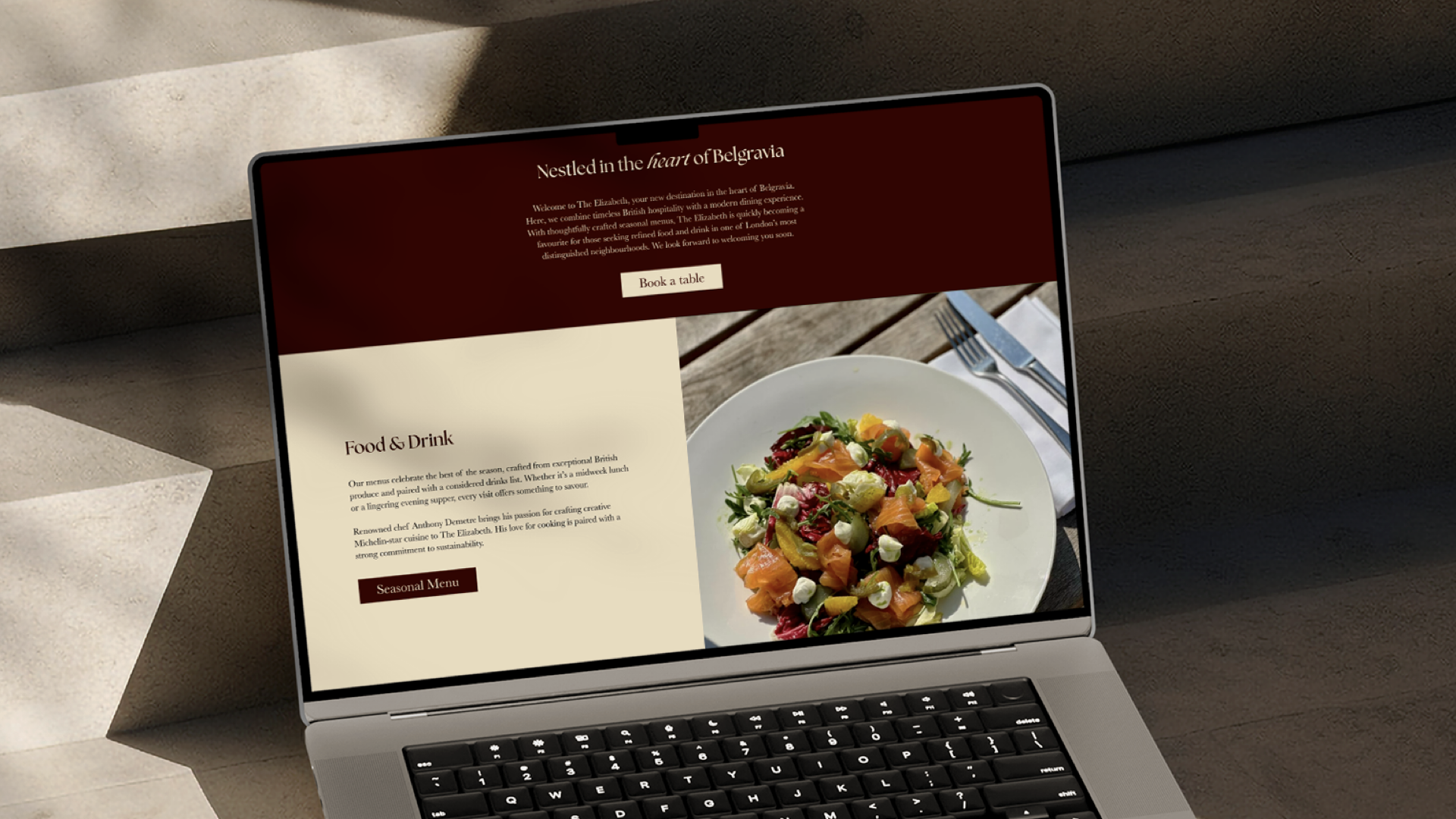
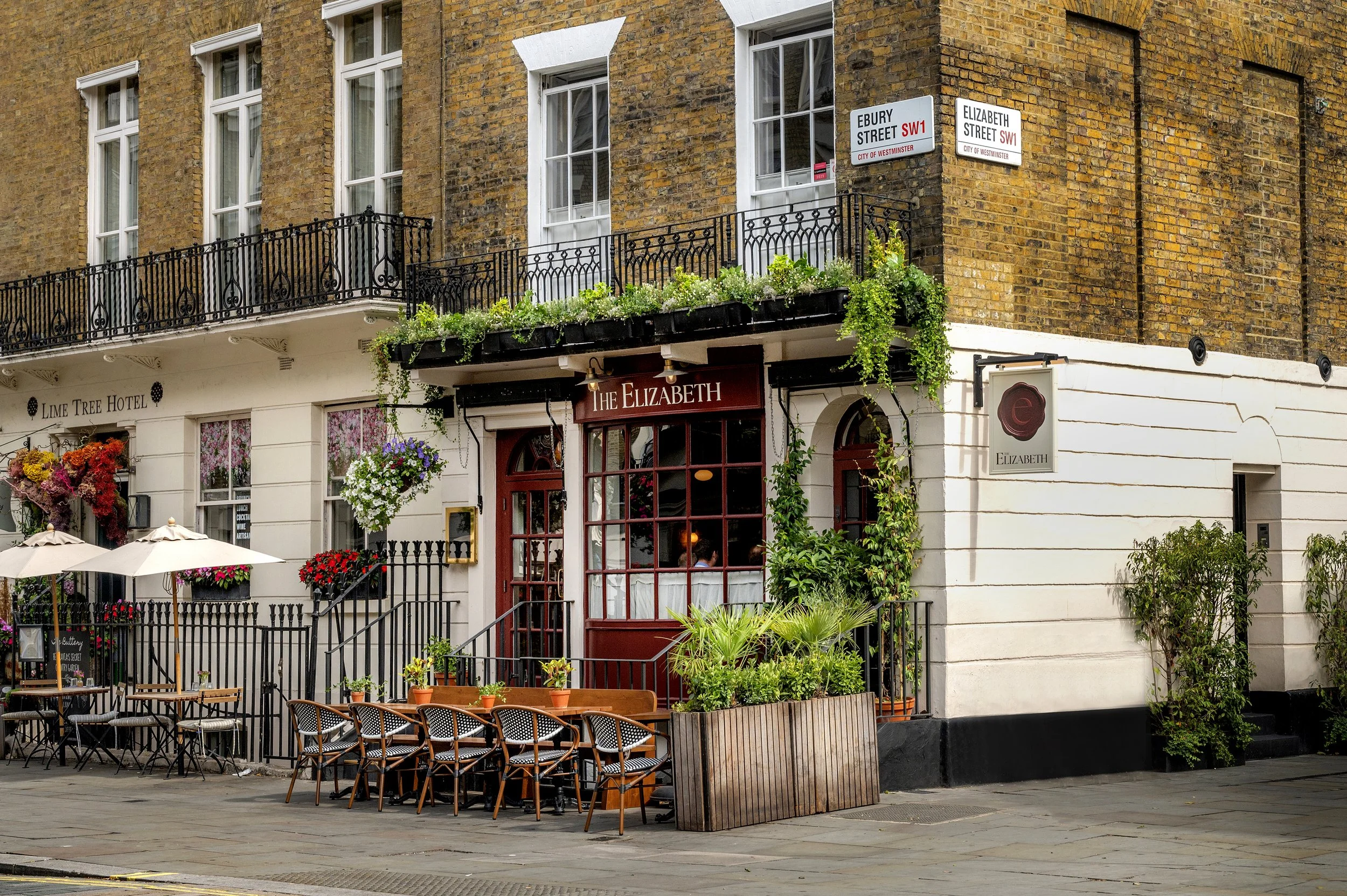
The Elizabeth is a bistro and bar in the heart of Belgravia that needed a refined new identity to match its ambition. More than a visual refresh, this was a complete commercial reset. The rebrand set out to capture the timeless charm of Belgravia while positioning The Elizabeth as one of London’s most desirable dining destinations.
My Role
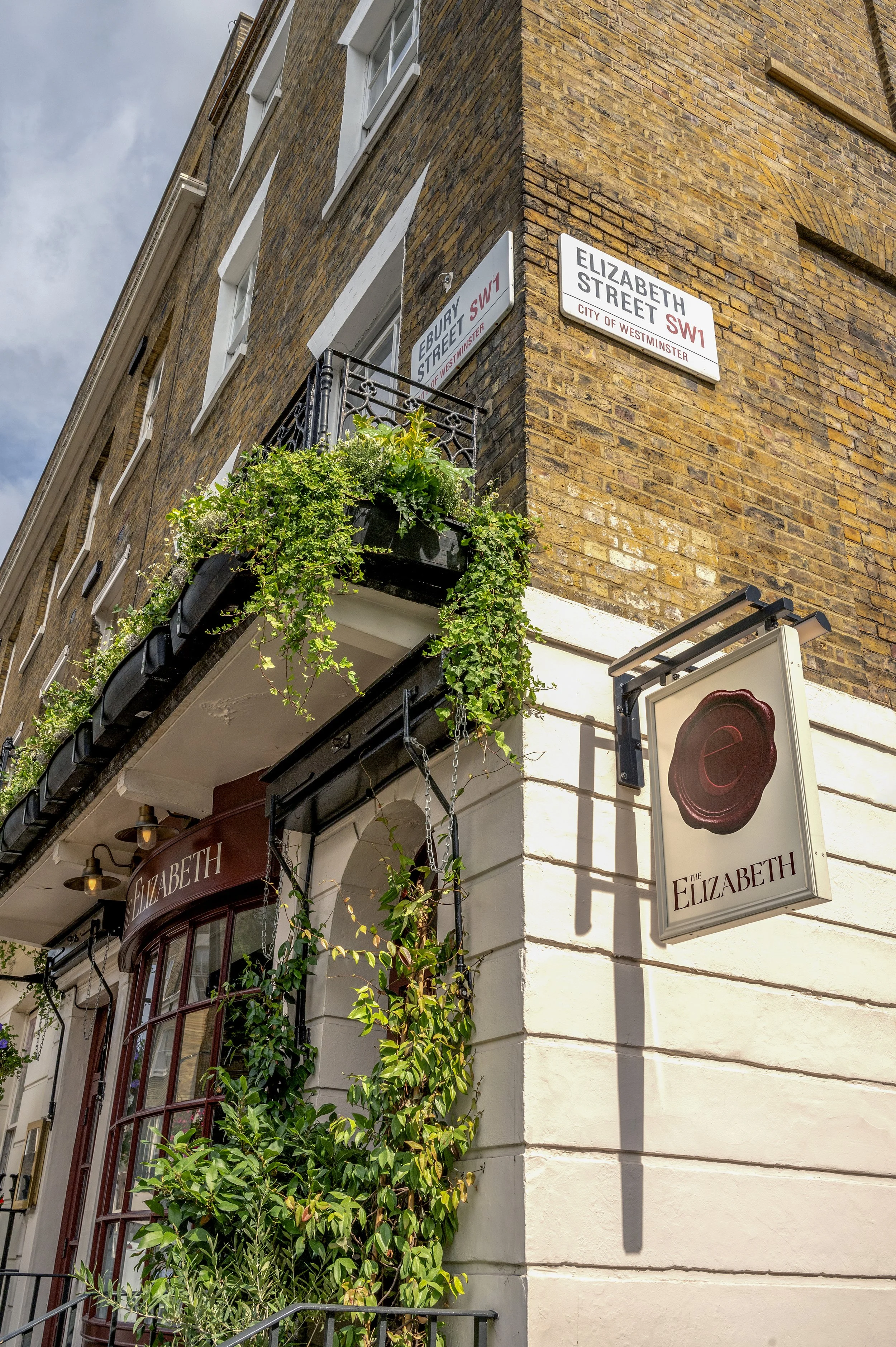
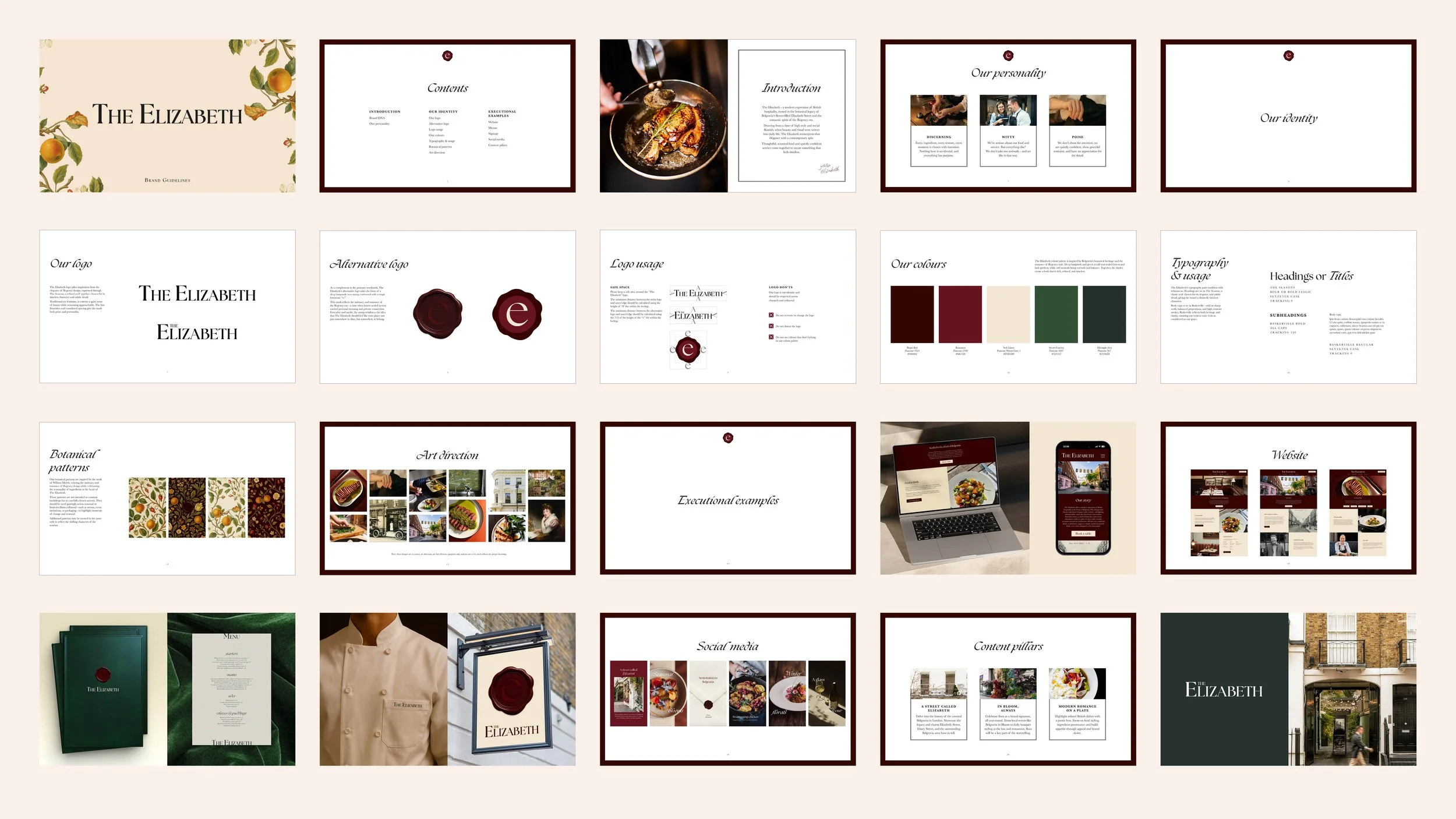
I led the creative direction and design across all aspects of the project - from concept development and brand identity design to exterior signage and printed materials. I also delivered comprehensive brand guidelines and templates to ensure the visual language remains consistent as the brand evolves.
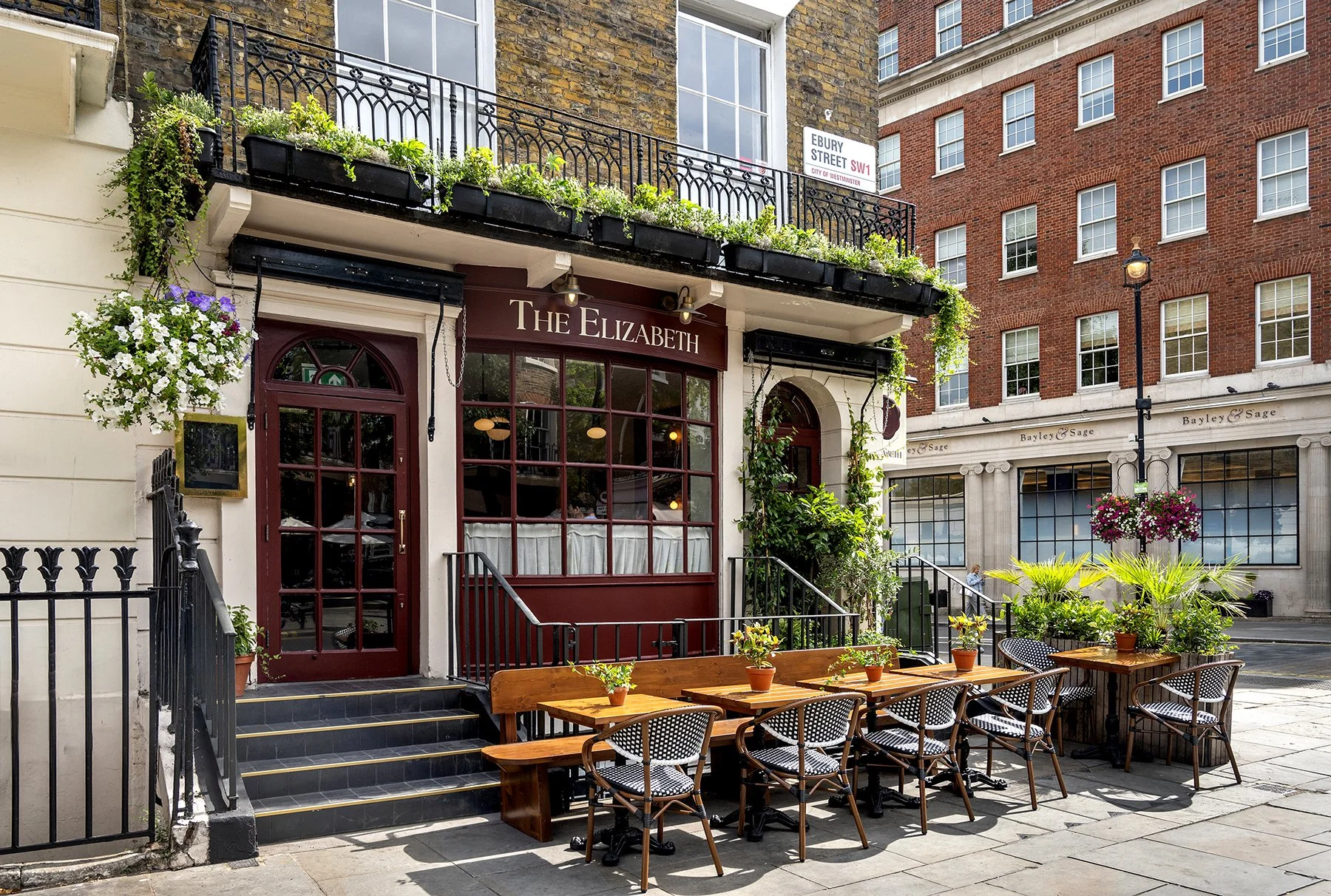


Visual Identity
Rooted in the Regency era, when Belgravia first emerged - the visual identity captures the romance and refinement of that period through a contemporary lens.
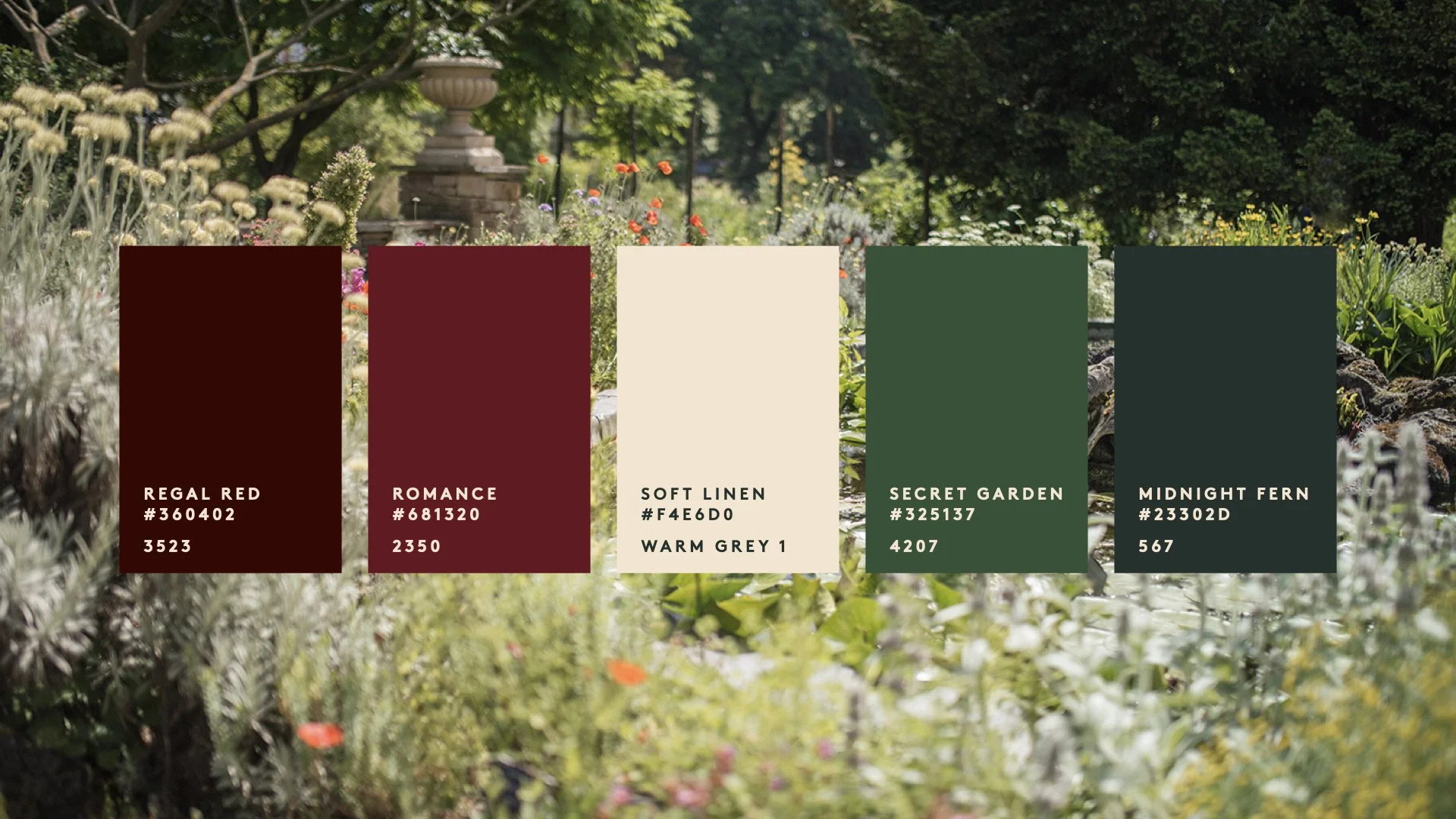
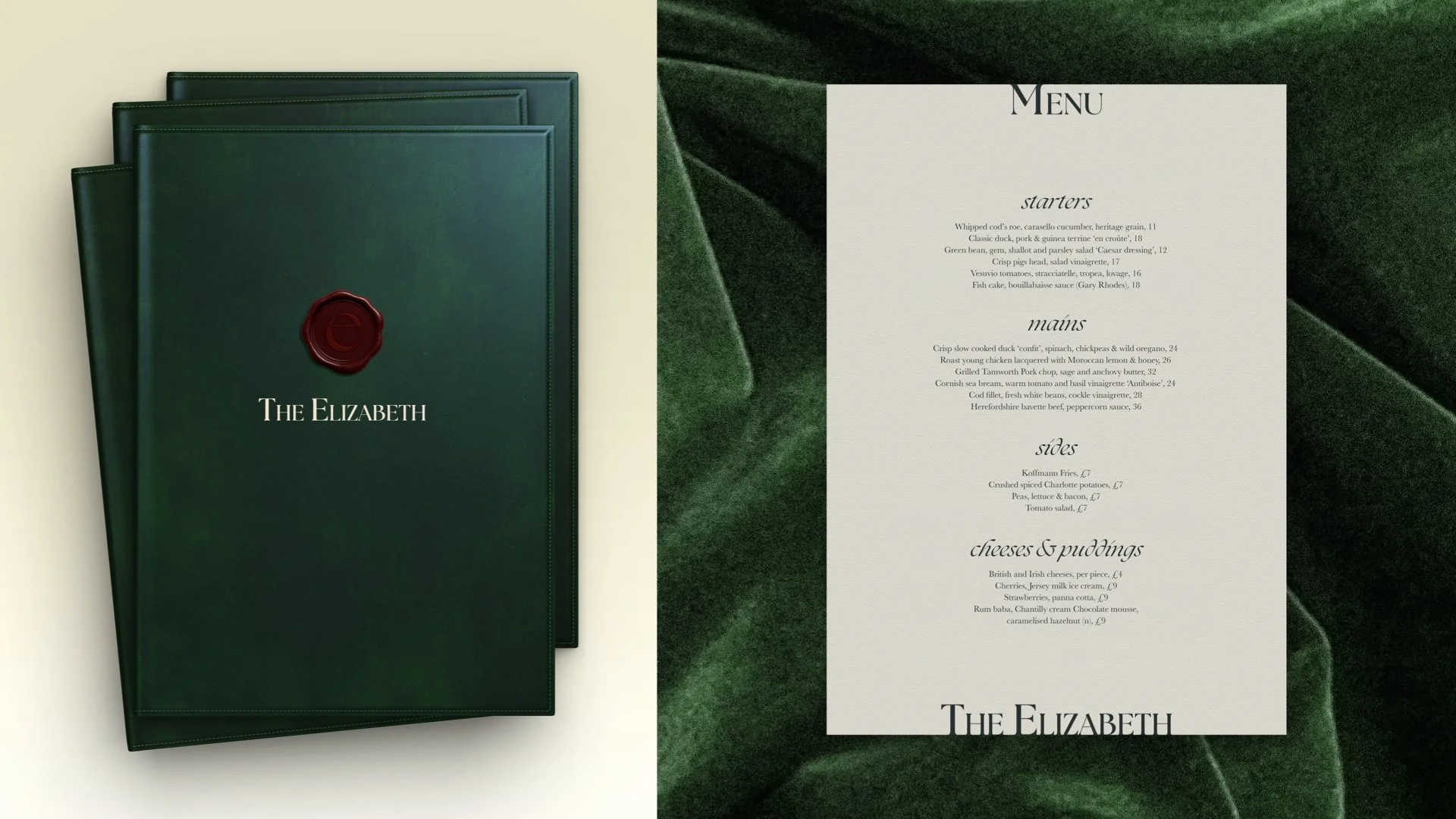
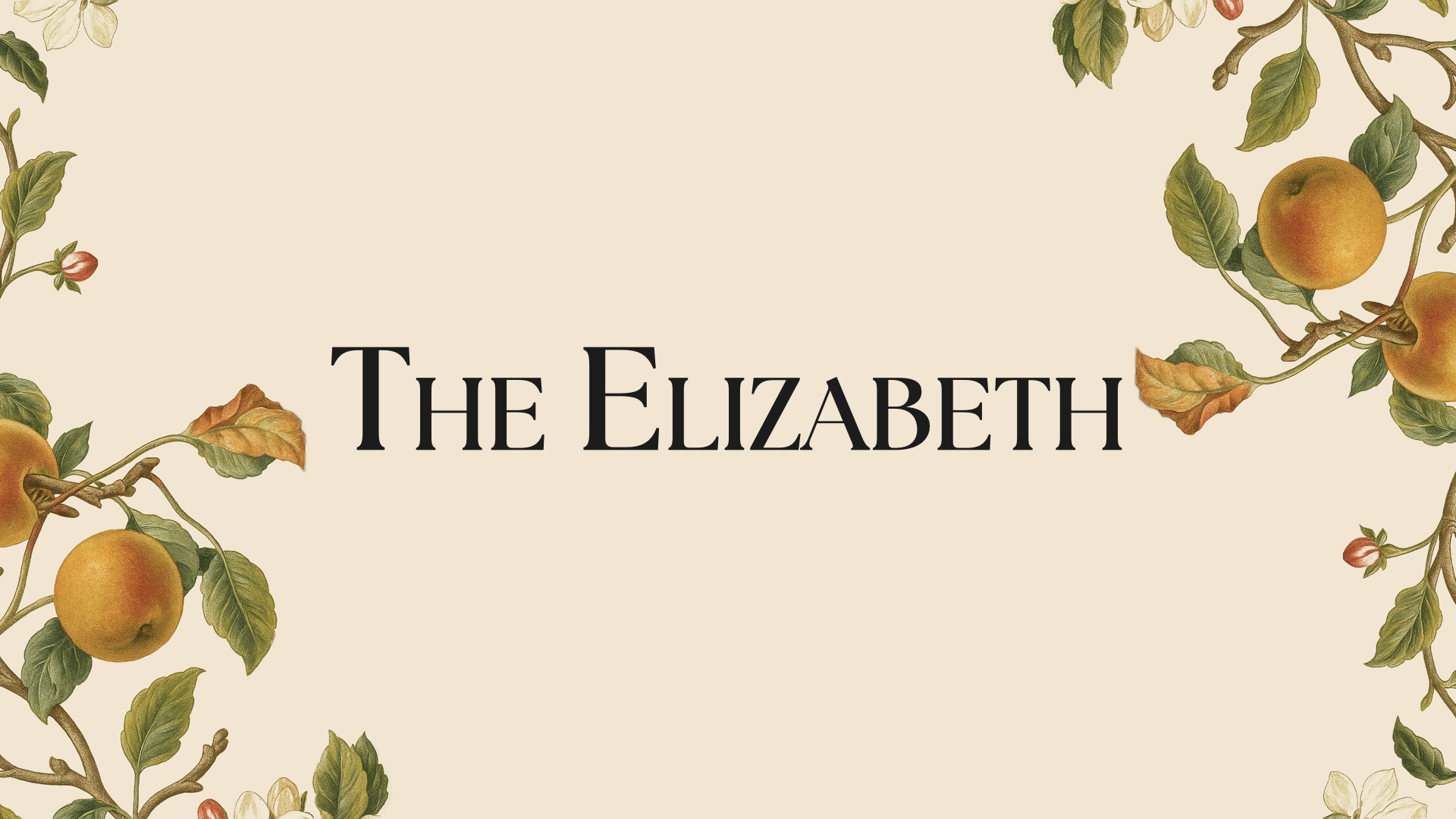
The logotype brings femininity and poise through its classic serif detailing, while the secondary wax-stamp monogram in deep burgundy reflects the intimacy and charm of personal correspondence. A rich, botanical-inspired colour palette draws from the textures of Belgravia’s infamous gardens. Together, these elements balance heritage with modern sophistication, creating an identity that feels timeless.




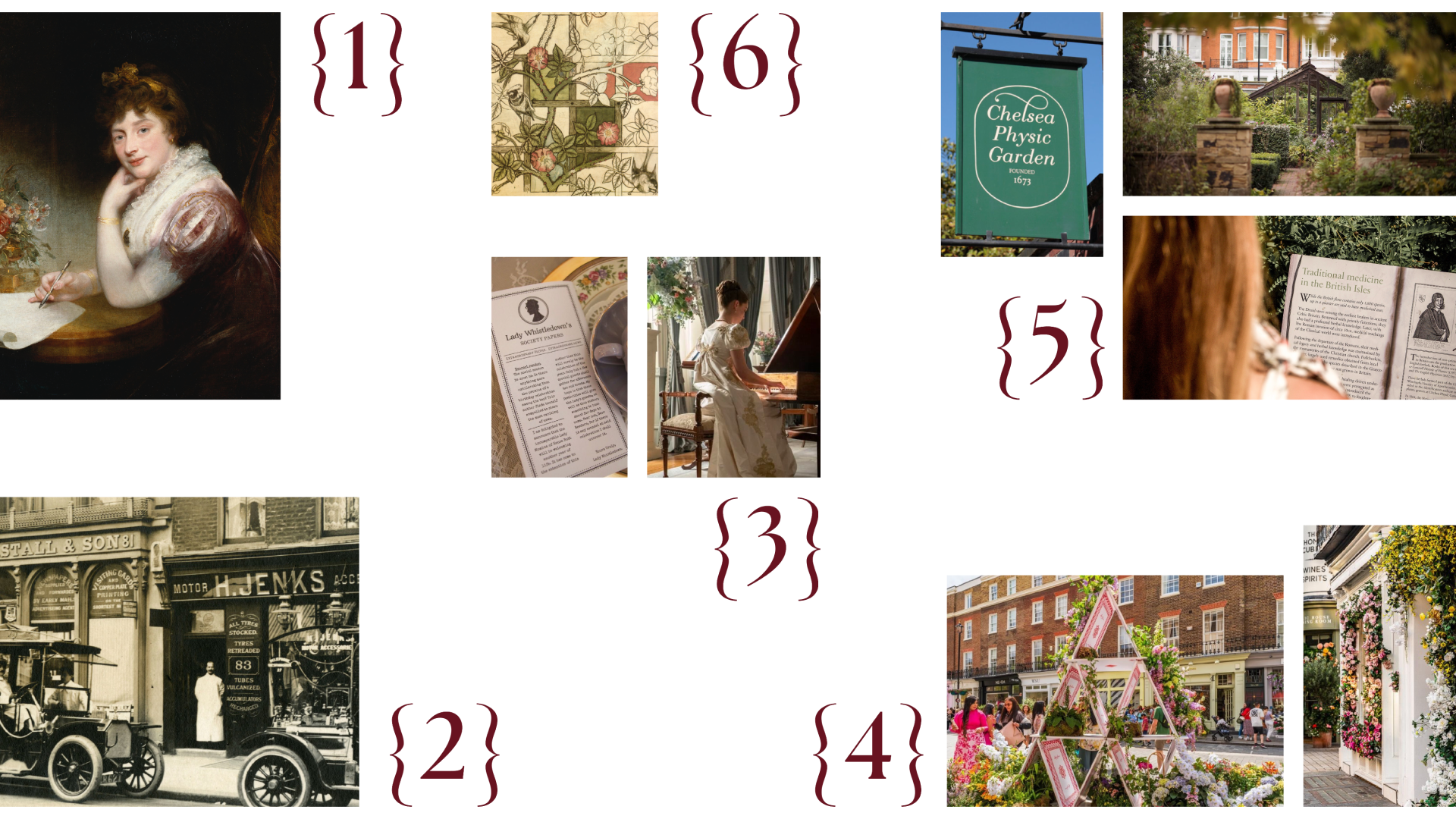
{1} Name and origin
Despite common assumptions, Elizabeth Street is not named after Queen Elizabeth I or II. Developed in the early 19th century, it is more likely named after a member of the Grosvenor family or Princess Elizabeth, daughter of King George III. While the exact origin remains unclear, the name itself evokes a sense of heritage and elegance that anchors the identity of the location.
{2} The Development of Belgravia
Belgravia was established in the early 19th century by the Grosvenor family, transforming former marshland into one of London’s most prestigious residential districts. Defined by grand townhouses, uniform facades and formal garden squares, the area’s architectural consistency and status-driven design inform an identity that honours the neighbourhood’s legacy.
{3} The Regency Era (1811–1820)
Belgravia’s emergence coincided with the height of the Regency era - a period shaped by elegance, social ritual and ornamental design. The renewed cultural interest in this time, popularised through series such as Bridgerton, has brought its romantic and decorative spirit back into contemporary consciousness, reinforcing its relevance today.
{4} Belgravia in Bloom
Belgravia in Bloom is an annual celebration of the area’s floral legacy, transforming the neighbourhood into a living garden through large-scale botanical installations. As a restaurant located within this environment, The Elizabeth naturally sits within this storytelling - part of a wider landscape defined by seasonal beauty, cultivated detail and botanical abundance.
{5} Chelsea Physic Garden
Founded in 1673, Chelsea Physic Garden is one of the world’s oldest botanical gardens and a cornerstone of London’s plant heritage. Home to over 4,500 species, its legacy of cultivation, study and preservation reflects a deep-rooted botanical culture that is echoed in the visual language of the brand.
{6} William Morris Textiles
A key figure in the 19th-century Arts & Crafts movement, William Morris revived traditional British textile design through intricate, repeating botanical patterns. His celebration of nature, craftsmanship and ornamentation provides a historical visual reference point, reinforcing the brand’s connection to botanical form, heritage and layered detail.
Outcome and impact
The rebrand has been met with exceptional praise, both from guests and across the wider hospitality community.
The relaunch also drew the attention of renowned critic Giles Coren, who, writing in The Times, described the restaurant’s new chapter as a “triumph.”
Today, The Elizabeth stands as a cohesive, beautifully crafted brand that celebrates its iconic Belgravia setting and sets a new benchmark for modern British dining.
“Elena’s design work has a beautiful balance of form and content. She is able to connect with audiences and develop impactful design compositions that make people feel something.”
- Stacey Pitsillides, PhD, Assistant Professor at Northumbria University